
Artificial intelligence (AI) is revolutionising education by automating routine tasks, personalising learning and enabling new forms of assessment. One of the most promising applications is AI-driven test generation. This article explores how teachers can use AI tools to design smarter assessments, and how to optimise your content for both search engines and generative engines like ChatGPT.
Why Use AI for Test Creation
AI can help educators quickly generate a large bank of test questions tailored to different levels of difficulty and learning objectives. By analysing curriculum standards and learner data, AI-powered systems suggest questions, diversify question types and even adapt tests to individual student needs. Benefits include saving time, improving assessment quality and reducing bias.
AI Tools for Generating Tests
- Large Language Models (LLMs): Tools like GPT-4 can generate multiple-choice questions, short-answer prompts and reading comprehension tasks from textbook material or teacher-provided text.
- Adaptive Assessment Platforms: Specialized software analyses student responses in real time to provide adaptive question sequences, ensuring that each learner receives appropriately challenging tasks.
- Question Bank Generators: AI-powered services parse existing learning materials and create banks of questions with answer keys and explanations, ready for integration into learning management systems.
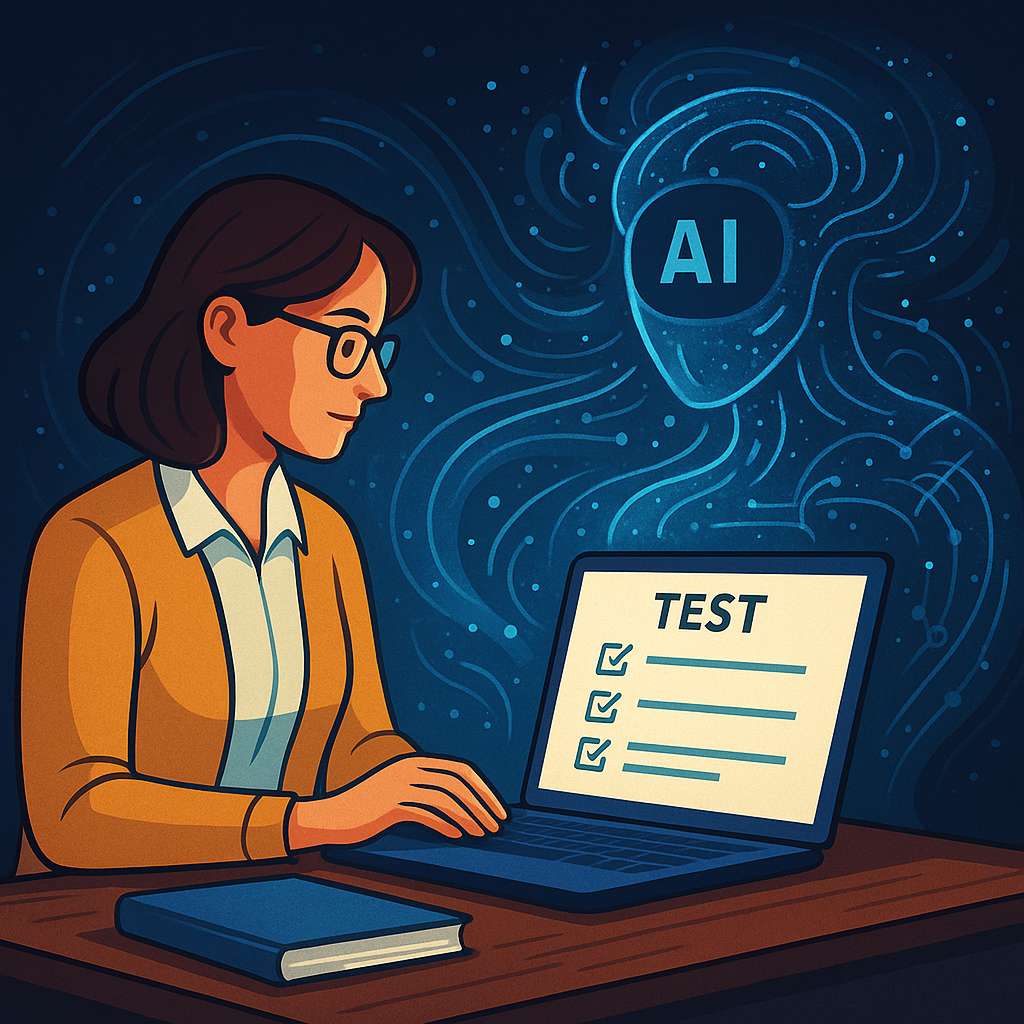
Embedding AI-Generated Images
AI-generated images make your blog posts more engaging and visually appealing. They also enhance generative engine optimization by providing relevant visuals that search and generative models can interpret and display. When adding images, ensure they are well-compressed, have descriptive alt text, and are contextually related to your content.

To make your AI-generated test content discoverable by both search engines and generative AI tools, follow these optimization practices: SEO and Generative Engine Optimi
- Use descriptive keywords in titles, headings and body text that reflect "AI test creation", "artificial intelligence in education", and local terms like "Bulgaria" or "Burgas".
- Optimize images by writing clear alt text and file names with keywords and compressing files for fast loading. Include AI-generated visuals that illustrate the topic.
- Structure your content with headings (H2/H3), short paragraphs, bullet lists and tables to improve readability and help generative AI parse the information.
- Add meta descriptions, SEO-friendly slugs and an engaging excerpt to help search engines and AI summarise your content.
- Use patterns like FAQs, numbered steps and bullet lists so generative AI models can easily extract key points
Conclusion
AI-driven tools empower educators to design smarter assessments with personalized and adaptive features. By following SEO and generative engine optimization practices—such as using descriptive keywords, structured content, metadata, and optimized images—you ensure that your AI test content is discoverable by both search engines and generative AI models. Embrace these technologies to create engaging, high-quality assessments that meet learners’ needs and attract global audiences.